
 Whatsapp
Journal Proper: Transactions, Entries and Solved Examples
Learn which transactions belong in journal proper with a clear decision guide, worked entries, a solved mixed exercise and practice questions with answers.
- 11th
- Accounts
A bookshop buys a cupboard on credit. You see the word “buys” and reach for the purchases book. Then you pause. The shop sells books, not cupboards. Where should this transaction go?
The credit purchase of a cupboard for shop use belongs in journal proper. Change the payment to cash, however, and the purchase belongs in the cash book.
That small change tells you something useful: choosing a book depends on the whole transaction, not just the verb in the question.
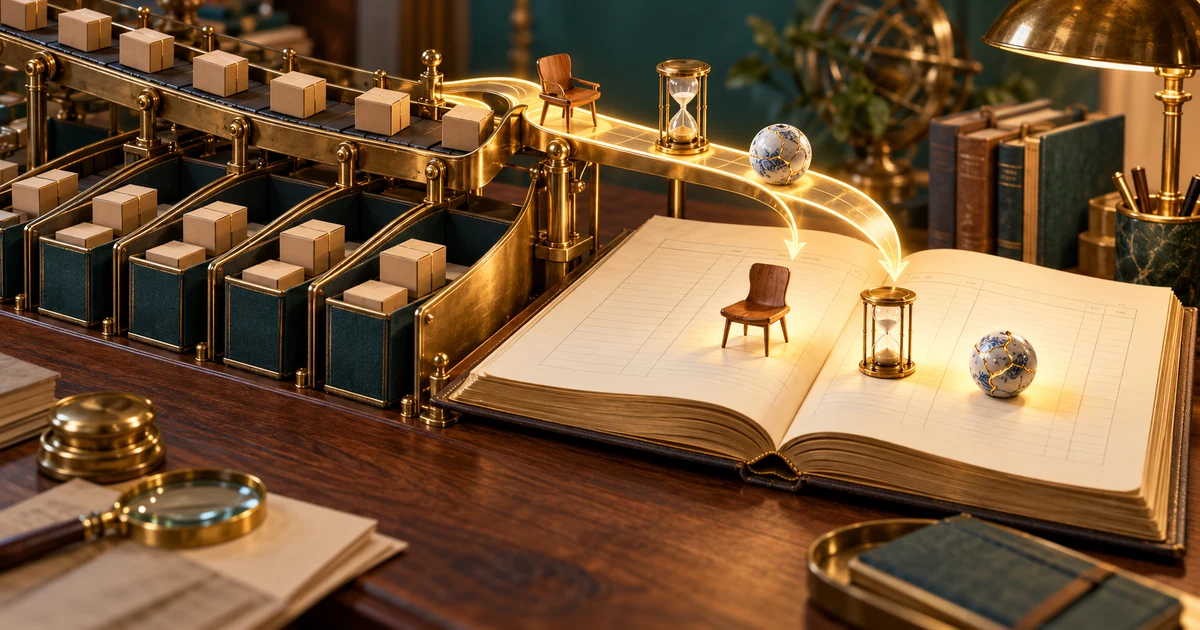
Think of the books of original entry as a sorting station. Routine parcels have dedicated channels. An unusual parcel still needs a proper destination, and journal proper provides it. It is not a place to hide transactions you do not understand.
What is journal proper?
Journal proper, also called the general journal or journal residual, records entries that do not fit the special journals maintained by a business. It uses the familiar date, particulars, ledger folio, debit and credit columns.
A wording point is worth settling early. Journal proper is itself commonly included among subsidiary books. When a question asks which transactions “do not belong in subsidiary books”, it usually means which ones do not belong in the other special books, such as the purchases book or sales book.
If you need the wider classification first, read our guide to choosing the right subsidiary book.
A quick decision guide
For a usual school exercise, assume a cash book with bank columns and the ordinary purchases, sales and returns books are maintained. Bills books apply where the question provides for them.
| Ask this | If the answer is yes |
|---|---|
| Is money being received or paid through cash or bank? | Record that receipt or payment in the cash book |
| Is it a credit purchase of merchandise for the business? | Use the purchases book |
| Is it a credit sale of merchandise? | Use the sales book |
| Is it a return relating to a credit purchase or credit sale of merchandise? | Use the appropriate returns book |
| Is it receipt or acceptance of a bill covered by a separate bills book? | Use that bills book |
| Is it an opening, adjustment, transfer, closing or rectification entry, or another transaction without a special book? | Consider journal proper |
This is a decision guide, not a claim that every business uses exactly the same books. A business with a separate journal for a particular class of transactions will use that journal. Follow the books specified in the question.
Also separate the stages of a transaction. Recognising an unpaid expense today and paying it next month are two different events with different recording requirements.
The goods test: what does this business sell?
A computer does not have one permanent classification for every business.
- A computer dealer buys a laptop for resale on credit: purchases book.
- A bookshop buys the same laptop for billing customers on credit: journal proper.
- The bookshop buys that laptop by bank transfer: cash book.
The laptop is merchandise in the first case and equipment for use in the second and third cases. Calling it an “asset” alone does not solve the question, because inventory is an asset too. Ask whether it is trading stock or an item acquired for use.
For the examples below, ignore tax and use the usual school-level periodic inventory treatment. Goods taken out of trading stock are credited to Purchases at cost. Where a question specifies another inventory system or tax treatment, follow it.
Worked example 1: a fixed asset bought on credit
On 6 April, Tara Books buys a cupboard for shop use from Oak Furnishers on credit for Rs. 24,000.
| Date | Particulars | L.F. | Debit (Rs.) | Credit (Rs.) |
|---|---|---|---|---|
| Apr. 6 | Furniture A/c Dr. | 24,000 | ||
| To Oak Furnishers A/c | 24,000 | |||
| Being a cupboard purchased on credit for shop use. |
Furniture increases, so it is debited. The amount owed to Oak Furnishers increases, so the supplier is credited. Purchases Account is not involved because the cupboard is not bookshop merchandise.
When Tara Books later pays Oak Furnishers through its bank, record the payment in the cash book, with a debit to the supplier’s ledger account arising from that record. Do not enter the original cupboard purchase again.
What if an old cupboard is sold on credit?
Suppose a different cupboard has a carrying amount of Rs. 7,000 and is sold to Neha on credit for Rs. 7,000. Assume depreciation has already been recorded and the exercise uses the direct asset-account method.
Neha A/c Dr. Rs. 7,000
To Furniture A/c Rs. 7,000
This also goes in journal proper. There is no sales-book entry because the bookshop is disposing of equipment. If sale proceeds differ from carrying amount, calculate the profit or loss; do not assume the selling price is automatically the amount to remove from the asset account. A question using an Asset Disposal Account needs that fuller method.
Worked example 2: an expense purchased on credit
On 9 April, Tara Books receives office printing services costing Rs. 1,800 from Printline, payable later. No separate expense journal is maintained.
Printing Expense A/c Dr. Rs. 1,800
To Printline A/c Rs. 1,800
The service is an expense, not merchandise bought for resale. No cash has moved. Journal proper is the appropriate book under the stated setup.
Now change the facts: Tara Books pays Rs. 1,800 immediately by bank transfer. The payment goes in the cash book. The expense classification remains the same; the book of original entry changes.
Worked example 3: opening the books
Suppose a business opens a new set of books with these non-cash balances:
- Stock: Rs. 32,000
- Furniture: Rs. 18,000
- Debtor, Rohan: Rs. 12,000
- Creditor, Kiran: Rs. 17,000
There are no cash or bank balances in this illustration.
Capital = assets minus liabilities = Rs. 62,000 minus Rs. 17,000 = Rs. 45,000.
| Particulars | Debit (Rs.) | Credit (Rs.) |
|---|---|---|
| Stock A/c Dr. | 32,000 | |
| Furniture A/c Dr. | 18,000 | |
| Rohan A/c Dr. | 12,000 | |
| To Kiran A/c | 17,000 | |
| To Capital A/c | 45,000 | |
| Total | 62,000 | 62,000 |
Narration: Being opening assets, liability and capital brought into the new books.
This is an opening entry in journal proper. It does not mean that the business bought all these assets afresh that morning.
If an exercise includes opening cash or bank balances, follow its opening-entry and cash-book instructions carefully. An opening balance is not a new receipt. Avoid posting the same balance twice when setting up the books.
Worked example 4: adjustments without a fresh payment
At 31 March, a business discovers four year-end adjustments. Each is independent.
| Situation | Debit | Credit | Amount (Rs.) |
|---|---|---|---|
| March salary remains unpaid | Salaries A/c | Outstanding Salaries A/c | 4,500 |
| Insurance already charged as expense includes a future period | Prepaid Insurance A/c | Insurance A/c | 2,400 |
| Furniture depreciation is to be charged using the direct method | Depreciation A/c | Furniture A/c | 3,000 |
| Commission already credited as income includes an unearned amount | Commission Received A/c | Commission Received in Advance A/c | 1,200 |
These are journal-proper adjustments. They correct the period to which an expense or income belongs, or recognise the use of an asset. None records a fresh cash movement on 31 March.
For the salary adjustment, the business has consumed employees’ services and owes money. When it pays the Rs. 4,500 later, the payment clears Outstanding Salaries, rather than creating the same salary expense again.
For prepaid insurance, the wording matters. The entry above assumes the entire original payment was debited to Insurance Expense. If it was initially recorded as an asset, the adjustment would instead transfer the expired portion to expense.
For more practice, see outstanding expenses and prepaid expenses with entries.
Worked example 5: goods leave the shop without a sale
Tara Books has already recorded its stock purchases. It now uses some books in three different ways:
| Event | Entry in journal proper |
|---|---|
| Owner takes books costing Rs. 900 for personal use | Drawings A/c Dr. 900; To Purchases A/c 900 |
| Books costing Rs. 1,300 are distributed as promotional samples | Advertisement A/c Dr. 1,300; To Purchases A/c 1,300 |
| Books costing Rs. 2,100 are destroyed by an accidental fire, with no insurance recovery | Loss by Fire A/c Dr. 2,100; To Purchases A/c 2,100 |
The cost moves out of ordinary trading purchases into the appropriate personal withdrawal, promotion expense or abnormal loss account. There is no customer buying the goods, so these are not credit sales.
Use cost, not the price printed on the books. If the owner’s books cost Rs. 900 but would sell for Rs. 1,200, the withdrawal in this simplified example is still Rs. 900. The business has not earned Rs. 300 from itself.
An insurance claim, salvage value or partial recovery would need additional treatment. Do not invent a recovery when the question gives none.
Worked example 6: correcting the wrong account
A payment of Rs. 6,200 for machinery repairs was correctly recorded as a bank payment, but its debit was wrongly posted to Machinery Account. The error is found before final accounts are closed.
The correct debit should have been Repairs. Machinery has an excess debit of Rs. 6,200. Correct it through journal proper:
Repairs A/c Dr. Rs. 6,200
To Machinery A/c Rs. 6,200
The bank entry was correct. Repeating it would create a second payment that never happened.
This error affects the choice of debit account, so the trial balance can still agree. No Suspense Account is needed for this correction. Other errors may need suspense treatment depending on the facts and the stage at which they are found.
Worked example 7: transfers and closing entries
Assume a sole trader has a Drawings debit balance of Rs. 8,000 at year-end. To transfer it to capital:
Capital A/c Dr. Rs. 8,000
To Drawings A/c Rs. 8,000
Drawings is closed and capital is reduced. The transfer does not mean the owner withdrew another Rs. 8,000 on the closing date.
For a separate business with a Rent Expense debit balance of Rs. 12,000, the closing entry is:
Profit and Loss A/c Dr. Rs. 12,000
To Rent A/c Rs. 12,000
For Commission Income with a credit balance of Rs. 3,500:
Commission Income A/c Dr. Rs. 3,500
To Profit and Loss A/c Rs. 3,500
These transfers go through journal proper. They gather the period’s results and close the relevant temporary accounts. The original rent payment and commission receipt, where made in cash or through bank, were recorded separately when they occurred.
Two traps involving bills and dishonoured cheques
A separate bills book changes the destination
Suppose a customer accepts a bill for an existing debt of Rs. 9,000. If the business maintains a Bills Receivable Book, record the bill there. Do not also record it in journal proper.
Now suppose the business endorses a bill receivable of Rs. 9,000 to supplier Dev in settlement of an equal debt. The usual journal-proper entry is:
Dev A/c Dr. Rs. 9,000
To Bills Receivable A/c Rs. 9,000
A bill retained by the business and later dishonoured also needs the debtor’s liability restored. With no noting charges, a Rs. 9,000 retained bill would produce Debtor A/c Dr. Rs. 9,000 and Bills Receivable A/c Cr. Rs. 9,000. Discounted, endorsed or bank-collected bills require attention to who held the bill and who paid any charges.
A dishonoured cheque may need two different records
A customer owing Rs. 5,000 gives a cheque for Rs. 4,900 in full settlement. A three-column cash book records the bank receipt and Rs. 100 discount allowed. The cheque later bounces, and the settlement discount is cancelled. Ignore bank charges.
- Reverse the Rs. 4,900 bank receipt through the cash book, restoring that amount to the customer’s account.
- Reverse the Rs. 100 discount in journal proper: Customer A/c Dr. Rs. 100; To Discount Allowed A/c Rs. 100.
The customer again owes Rs. 5,000. Reversing only the cheque leaves the balance Rs. 100 short. Entering the bank reversal again in journal proper would duplicate it.
A solved mixed exercise: prepare only journal proper
Mira Stationers sells notebooks and pens. It maintains the usual special books, including a cash book with bank columns. Ignore tax. Record only the transactions that belong in journal proper.
| Date | Transaction |
|---|---|
| June 2 | Bought notebooks for resale on credit from Paperline, Rs. 18,000 |
| June 4 | Bought an office printer on credit from Pixel, Rs. 15,000 |
| June 6 | Paid shop rent by bank transfer, Rs. 6,000 |
| June 8 | Owner took trading goods costing Rs. 800 for personal use |
| June 10 | Returned credit-purchased notebooks costing Rs. 1,500 to Paperline |
| June 14 | Sold an old office chair to Ravi on credit for its carrying amount of Rs. 2,000 |
| June 30 | Salaries outstanding, Rs. 3,200 |
| June 30 | Depreciation on office equipment, Rs. 1,500, using the direct method |
June 2 belongs in Purchases Book, June 6 in Cash Book, and June 10 in Purchases Return Book. The remaining five entries are:
| Date | Particulars | L.F. | Debit (Rs.) | Credit (Rs.) |
|---|---|---|---|---|
| June 4 | Office Equipment A/c Dr. | 15,000 | ||
| To Pixel A/c | 15,000 | |||
| Being an office printer bought on credit. | ||||
| June 8 | Drawings A/c Dr. | 800 | ||
| To Purchases A/c | 800 | |||
| Being trading goods withdrawn by the owner at cost. | ||||
| June 14 | Ravi A/c Dr. | 2,000 | ||
| To Furniture A/c | 2,000 | |||
| Being an old office chair sold on credit at carrying amount. | ||||
| June 30 | Salaries A/c Dr. | 3,200 | ||
| To Outstanding Salaries A/c | 3,200 | |||
| Being unpaid salaries recognised. | ||||
| June 30 | Depreciation A/c Dr. | 1,500 | ||
| To Office Equipment A/c | 1,500 | |||
| Being depreciation charged on office equipment. | ||||
| Total | 22,500 | 22,500 |
The L.F. column is completed when ledger references are available. Do not invent page numbers.
Notice that the total excludes transactions belonging to the other books. The instruction is to prepare journal proper, not to journalise the entire list as if no special books existed.
Try these before checking the answers
Assume the same ordinary set of special books and ignore tax.
- A furniture dealer buys chairs for resale on credit. Which book?
- The dealer buys a chair for the manager’s office on credit. Which book?
- The dealer pays immediately for the office chair by cheque. Which book?
- A debtor owing Rs. 2,700 is written off as wholly irrecoverable. Give the entry and book.
- Goods costing Rs. 1,600, marked at Rs. 2,200, are taken by the owner. Give the amount and entry.
- Wages of Rs. 4,000 were correctly paid through bank but wrongly debited to Salaries. Give the correction before closing the accounts.
- A customer returns goods previously sold on credit. Which book?
- Goods are sold on credit for Rs. 10,000 less 10% trade discount. Is the discount entered in journal proper?
Answers with reasons
- Purchases Book: the chairs are trading stock bought on credit.
- Journal Proper: Furniture A/c Dr.; To Supplier A/c. The chair is for office use.
- Cash Book: the bank payment determines the recording route.
- Journal Proper: Bad Debts A/c Dr. Rs. 2,700; To Debtor A/c Rs. 2,700. No cash is received by writing off a debt.
- Journal Proper: Drawings A/c Dr. Rs. 1,600; To Purchases A/c Rs. 1,600. Use cost under the stated periodic treatment.
- Journal Proper: Wages A/c Dr. Rs. 4,000; To Salaries A/c Rs. 4,000. Leave the correct bank payment alone.
- Sales Return Book: it reverses a credit sale of merchandise.
- No separate trade-discount entry: record the credit sale in Sales Book at Rs. 9,000.
A final check before you submit
Read your answer once as a bookkeeper rather than as a student trying to finish quickly. Has the business actually paid money? Is the item stock for resale? Are you recording a new transaction, adjusting an old one, or closing an account?
Then check that every debit equals its corresponding credit, the amounts follow the stated assumptions, and the same event has not been entered in two books. For an entry question, add a brief narration that explains what happened. For a classification question, give the book and a short reason.
Textbook references for further study
The classification and journal-proper categories are covered in NCERT Accountancy, Recording of Transactions II, particularly Section 4.6. The ICAI student capsule on subsidiary books and cash book provides another concise reference for the scope of the special journals. The businesses, figures and practice exercises above are original teaching examples.
Frequently asked questions
1. What is journal proper in simple words?
It is the book used for entries that do not fit the other special journals maintained by a business. Examples include adjustments, closing transfers and credit purchases of equipment for use.
2. Is journal proper a subsidiary book?
Yes, it is commonly classified as a subsidiary book or book of original entry. The distinction is between journal proper and the other specialised books, not between journal proper and all subsidiary books as a group.
3. Does every credit purchase go in journal proper?
No. Credit purchases of trading goods go in the purchases book. A credit purchase of equipment for business use ordinarily goes in journal proper when there is no dedicated book for it.
4. Why is furniture sometimes recorded in the purchases book?
Furniture bought for resale by a furniture dealer is merchandise. Furniture bought for use in an office is equipment. The business’s purpose for holding it determines the classification.
5. Are cash purchases of assets entered in journal proper?
The payment belongs in the cash book when one is maintained. Do not repeat the same purchase in journal proper merely because the item is a fixed asset.
6. Where do outstanding salaries go?
The adjustment is recorded in journal proper by debiting Salaries and crediting Outstanding Salaries. The later payment is recorded through the cash book against the outstanding liability.
7. Is a trade discount recorded in journal proper?
No separate entry is made for a trade discount in the usual school treatment. Record the transaction at the net amount after trade discount in the appropriate book.
8. Does every correction require Suspense Account?
No. Correcting a debit posted to the wrong account can simply involve debiting the correct account and crediting the wrong one. Whether suspense is needed depends on the error and the records already prepared.
9. Where are bills of exchange recorded?
Receipt and acceptance use separate bills books when those books are maintained. Endorsement and dishonour commonly require journal-proper entries, with the exact accounts depending on the bill’s history.
10. How can I check that I have chosen journal proper correctly?
Name the special books maintained, rule out the ones that do not fit, and explain the nature of the remaining entry. Then confirm that you have not duplicated a cash-book or other special-book record.
Looking for commerce tuitions?
Prachi is a gold-medalist commerce teacher with experience at Deloitte and KPMG. She focuses on fundamentals to build a strong foundation.